Knowledge Graphs Made Easy
Design. Build. Maintain.
What Are Knowledge Graphs?
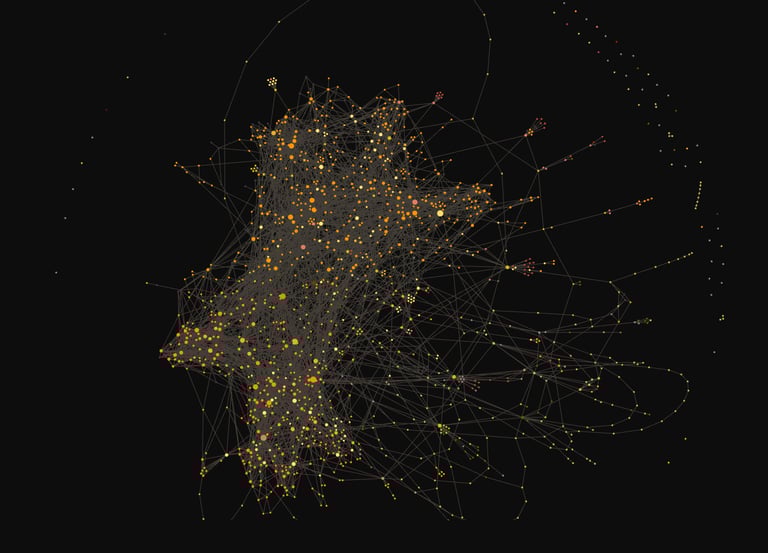
A knowledge graph is a way to represent the world as a network of connected facts — not just data, but relationships.
Instead of isolated tables or JSON objects, everything is linked, forming a map of how things interact.
Example
Think about something simple — going to the doctor.
You have a Person (the patient).
The person books an Appointment.
The appointment happens at a Clinic.
A Doctor conducts the appointment.
The doctor prescribes a Medication.
The medication belongs to a Drug Category.
All of these pieces — people, places, events, and items — are connected.
If the medication changes, you can instantly see which patients and doctors are affected.
If a clinic updates its schedule, you can trace which appointments need to move.
That’s what a knowledge graph does:
It connects data so that systems and people can understand context, reason about impact, and stay consistent even as information changes.
Domain Modeller helps you design and maintain this kind of structure —
a living map of your world that stays accurate as it evolves.

Why Use Knowledge Graphs?
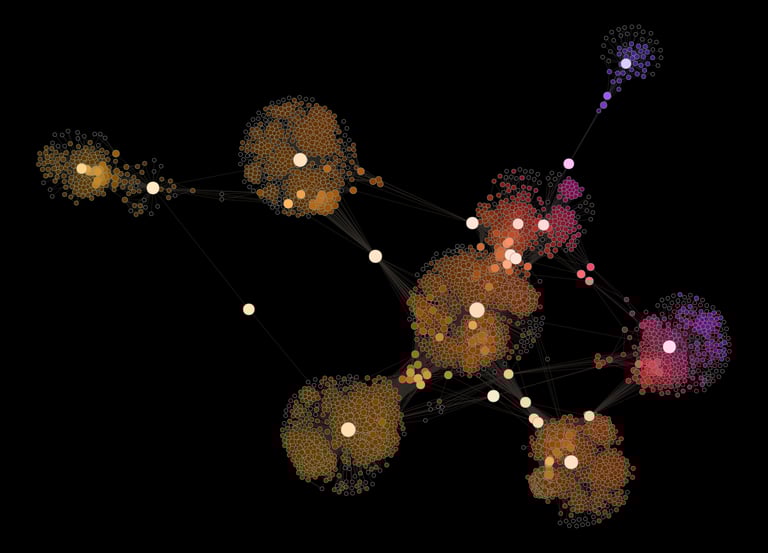
Knowledge graphs connect data into a single, meaningful structure — showing how things relate instead of just listing them.
They bring context, so systems can reason about change; consistency, so teams share one source of truth; and flexibility, so models evolve without breaking.
They also make collaboration easier — business and engineering can finally speak the same language — and prepare your data for automation and AI that actually understands it.
Domain Modeller gives you the tools to build and maintain that clarity at scale.
Describing how the world looks like at any given time - Domain Modeller
Domain Modeller helps you describe how your world looks - as a graph.
Batteries Included
Pre-integrated with services like Google Maps for instant validation and enrichment.
Every change is captured as an event, creating a complete record of evolution.
Everything is accessible through the API, so your data model integrates anywhere.
Event Based
API First
Event Store
The system keeps every historical change, so you can replay or analyze the past.
Scalable
Calculators
Built in Go and MongoDB, designed to handle millions of entities efficiently.
Run Python-based calculations automatically on every transaction.
Internationalization
Model and validate data in as many languages as your domain requires.
Build Custom Rules Without Coding
Version Control
Define validation and logic through a simple, visual or declarative interface.
Every schema change is tracked, making your domain auditable and reversible.
Declarative (via YAML)
Describe your models and logic in clean, human-readable YAML files.
Time Machine
Explore how your graph looked at any point in time with full temporal traceability.
Rule Engine
Define complex business logic declaratively — no coding required.
Our Workflow Engine controls how the domain evolves. It defines the processes, automations, and human interactions that change your data, while ensuring that every step complies with your schema.
Integrate with Anything
Connect to any external system or service through simple HTTP calls.
Teams focus on the work while the system enforces the process.
Trigger, monitor, and control workflows programmatically through APIs.
Collaborate Efficiently
API First
Integrate AI Securely
Let AI participate in workflows safely within your schema and governance rules.
BPMN-like
Compensation Routes
Follows BPMN-inspired types for quick learning and intuitive process design.
Handle cancellations, rollbacks, and error recovery automatically to keep workflows consistent and resilient.
Extendable
Add custom connectors, actions, or external integrations effortlessly.
Asynchronous Task Management
Adopted NATS to establish a resilient and highly scalable message-driven architecture
Declarative (via YAML)
Describe your workflows in clean, human-readable YAML files.